Difficulty
B1 30-C2 90
A1
A2
A2+
B1
B1+
B2
B2+
C1
C1+
C2
0
10
20
30
40
50
60
70
80
90
100
B2
How a Newspaper Convinced New York That Bat-Winged People Lived on the Moon
The Great Moon Hoax of 1835
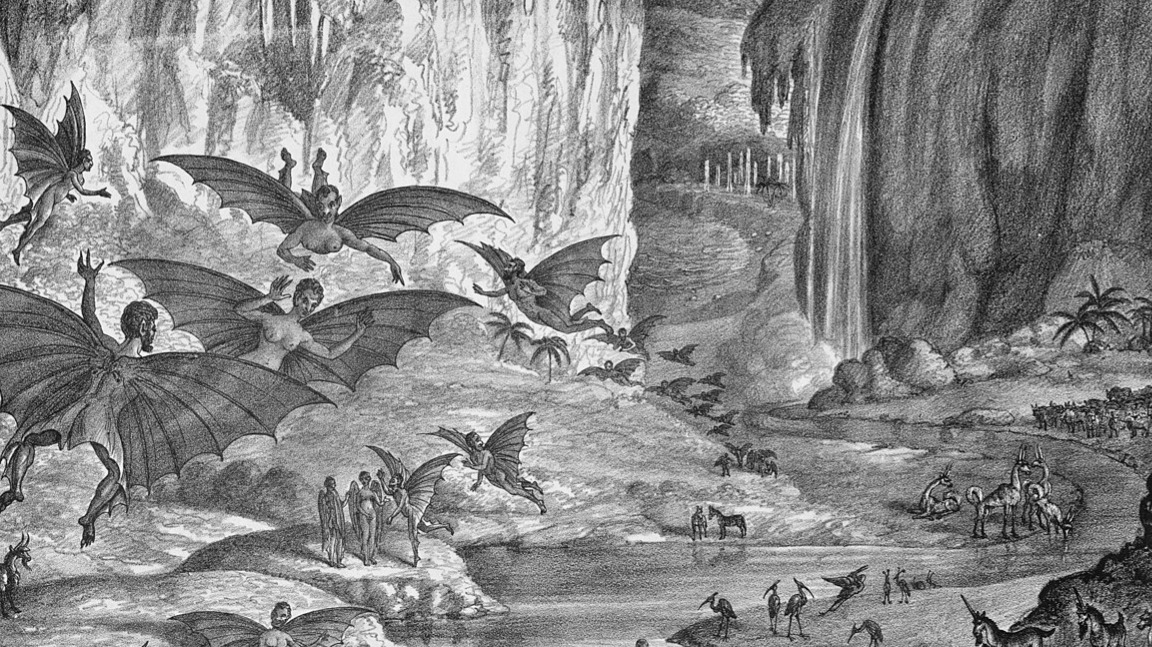
Readers learned about lunar oceans and beaches, forests, herds of bison, tiny zebras, unicorns, and beavers that walked upright on two legs. And then the bat-winged humanoids, who the paper said had built temples. All of it supposedly seen through an immense telescope of an entirely new principle, with a lens 24 feet across and 7 tons in weight.
Planner: Eli Hart
4 hours ago
Why people believed it
But the second part matters more. The ground had already been prepared. The professor grew to ways and had claimed to see walls, roads, and cities on the lunar surface. The clergyman Dick had assured the public that the moon was home to billions of beings. Readers were not being asked to believe something strange and new. They were being handed proof of something they already half expected.
The admission and the lesson
That is the thing about a great hoax. It rarely creates a belief. It finishes one.